

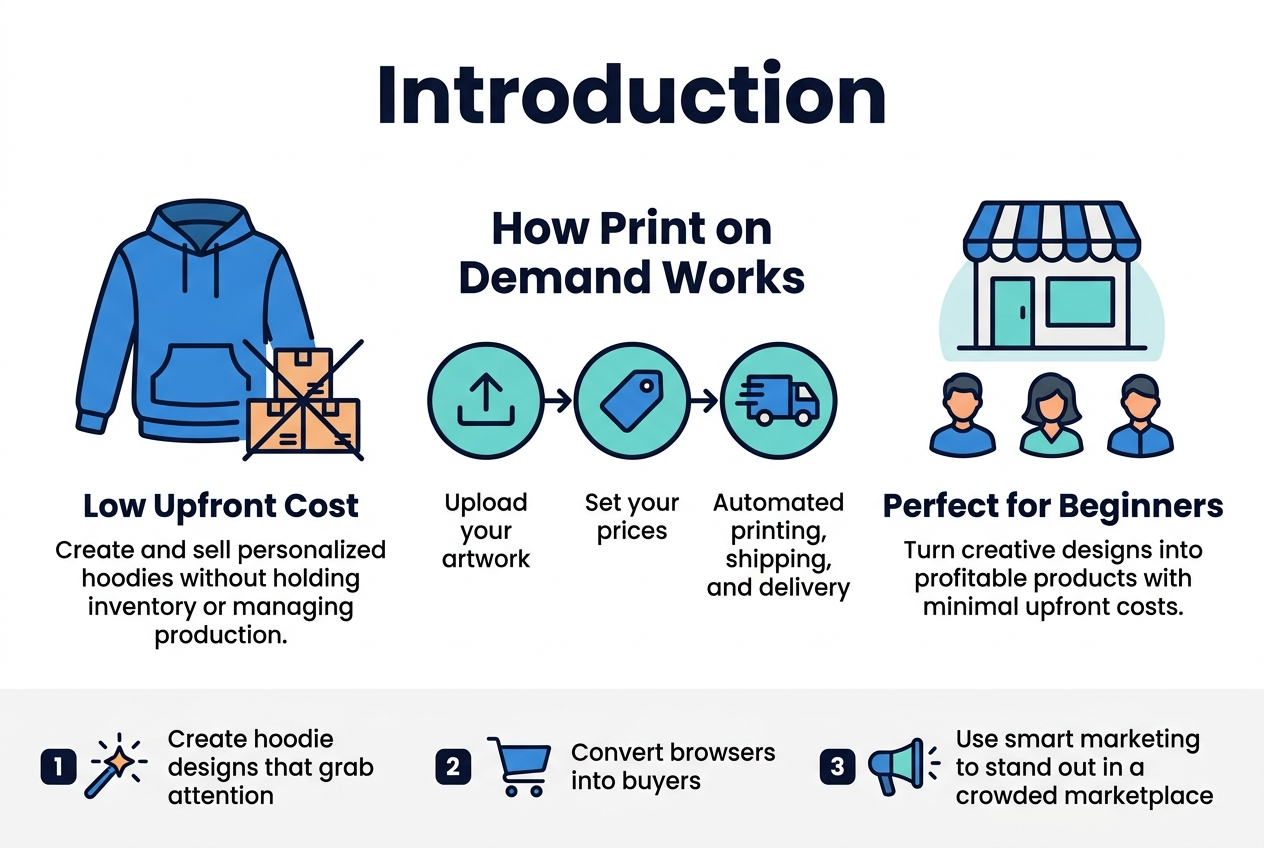
Custom print on demand hoodies let you create and sell personalized apparel without holding inventory or managing production. This business model appeals to entrepreneurs, artists, and small business owners who want to turn creative designs into profitable products with minimal upfront costs.
Print on demand hoodies work by connecting your designs with automated printing services that handle everything from production to shipping when customers place orders. You simply upload your artwork, set your prices, and earn profit on each sale while the platform manages the technical details.
We’ll explore how the print-on-demand business model works and why it’s perfect for beginners. You’ll also learn proven strategies for creating hoodie designs that grab attention and convert browsers into buyers. Finally, we’ll cover smart marketing tactics that help your custom hoodie brand stand out in a crowded marketplace.
Understanding Print-on-Demand Hoodie Business Model
How Print-on-Demand Works for Custom Apparel
Print-on-demand operates on a simple yet powerful principle: products are only created when customers place orders. When someone purchases your custom hoodie design, the POD platform receives the order, prints your artwork onto a blank hoodie, packages it, and ships it directly to your customer. You never touch the physical product or handle inventory.
This seamless process begins when you upload your designs to a POD platform and set your retail prices. The platform integrates with your online store or marketplace listing, automatically processing orders as they come in. Quality control, printing, packaging, and shipping are all handled by the POD provider, leaving you free to focus on creating designs and marketing your brand.
The technology behind modern POD services has evolved significantly, with many platforms offering direct-to-garment (DTG) printing, sublimation, and heat transfer methods. These techniques produce high-quality, durable prints that can compete with traditional manufacturing methods.
Benefits of Zero Inventory Investment
Starting a hoodie business without inventory eliminates the biggest barrier most entrepreneurs face: upfront costs. Traditional apparel businesses require thousands of dollars in inventory investment before selling a single item. With POD, you can launch with just your design ideas and a small marketing budget.
Risk reduction represents another major advantage. You won’t end up with boxes of unsold hoodies taking up space in your garage. Every product sold is already paid for by a customer, guaranteeing your cash flow remains positive. This model allows you to test new designs quickly without financial risk.
Scalability becomes effortless when you don’t manage physical inventory. Whether you sell 10 hoodies or 10,000, your operational complexity remains the same. You can expand into new niches, seasonal designs, or trending topics without worrying about storage space or unsold stock.
The flexibility to pivot quickly gives POD businesses a competitive edge. If a design isn’t performing, you can remove it without losses. When trends emerge, you can capitalize on them immediately without ordering minimum quantities or waiting for production runs.
Popular Print-on-Demand Platforms for Hoodies
Printful stands out as the premium choice for quality-conscious sellers. Their hoodie selection includes brands like Gildan, Bella+Canvas, and Champion. Integration with Shopify, Etsy, and WooCommerce makes setup straightforward. Pricing runs higher than competitors, but print quality and fulfillment speed justify the cost for serious businesses.
Printify offers the most extensive network of print providers, giving you options for pricing and location-based fulfillment. Their platform connects you with multiple suppliers, allowing comparison shopping for the best rates and fastest shipping to your customers’ locations.
Gooten provides competitive pricing and solid quality, particularly for high-volume sellers. Their mockup generator creates professional product photos automatically, saving time on marketing materials.
Teespring (Spring) operates differently as both a POD provider and marketplace. You can sell through their platform without needing your own website, making it ideal for beginners testing their first designs.
| Platform | Base Cost | Print Quality | Shipping Speed | Best For |
|---|---|---|---|---|
| Printful | Higher | Excellent | 2-7 days | Premium brands |
| Printify | Variable | Good | 3-10 days | Price comparison |
| Gooten | Competitive | Good | 3-8 days | High volume |
| Teespring | Lower | Good | 5-14 days | Beginners |
Profit Margins and Pricing Strategies
Successful POD hoodie businesses typically maintain profit margins between 20-40%. Your profit equals the retail price minus the base cost, platform fees, and payment processing charges. For example, if a hoodie costs $20 from the POD provider and you sell it for $35, your gross profit is $15 before payment processing fees.
Premium positioning strategy works well for unique designs targeting specific niches. Customers will pay $45-60 for hoodies featuring artwork that resonates with their identity or interests. This approach requires exceptional design quality and targeted marketing but yields the highest profits.
Volume pricing becomes viable when you establish a customer base willing to buy multiple items. Offering bundle deals or loyalty discounts can increase average order values while maintaining healthy margins.
Competitive research helps establish optimal pricing. Analyze similar designs on marketplaces like Etsy or Amazon to understand what customers pay for comparable products. Price slightly below premium competitors while highlighting your unique value propositions.
Dynamic pricing allows adjustment based on demand and seasonality. Holiday-themed hoodies can command premium prices during relevant seasons, while evergreen designs benefit from consistent pricing that builds brand recognition.
Consider psychological pricing techniques like ending prices in .99 or .95 to make products appear more affordable while maintaining margins.
Designing Eye-Catching Custom Hoodie Graphics
Essential Design Software and Tools
The foundation of successful print-on-demand hoodies starts with choosing the right design software. Adobe Illustrator stands as the industry gold standard for creating vector-based graphics that scale perfectly at any size. Its powerful tools let you craft clean, professional designs that maintain crisp edges and smooth curves when printed on fabric.
For those on a budget, Canva Pro offers an excellent alternative with pre-made templates specifically for apparel. The platform includes built-in design elements and fonts that work well for casual hoodie designs. Photoshop becomes your best friend when working with photographic elements or creating complex digital artwork that requires detailed manipulation.
Free options like GIMP and Inkscape provide robust functionality without the subscription fees. These open-source programs handle most design tasks effectively, though they require a steeper learning curve. Procreate on iPad has gained popularity among designers who prefer drawing directly on a tablet, offering intuitive brush tools and layer management.
Beyond software, investing in a graphics tablet like Wacom or Huion dramatically improves your workflow. Hand-drawing designs feels more natural and allows for unique artistic touches that set your hoodies apart from generic templates. A good monitor with accurate color representation ensures your designs translate properly to print, preventing disappointing color shifts in the final product.
Creating High-Resolution Artwork for Print Quality
Print-on-demand services demand specific technical requirements that directly impact your hoodie’s final appearance. Always work at 300 DPI (dots per inch) minimum for crisp, professional results. This resolution prevents pixelation and ensures fine details remain sharp when transferred to fabric.
Design your artwork at actual print size rather than scaling up later. A design intended for a 12-inch chest print should be created at exactly 12 inches wide at 300 DPI. This approach maintains image quality and helps you visualize how text and elements will appear on the finished garment.
Vector graphics offer the biggest advantage for scalability. Logo designs, text-based graphics, and simple illustrations work best in vector format since they can be resized without quality loss. Save these files as EPS or PDF formats for submission to print services.
When incorporating raster elements like photographs or complex digital paintings, ensure they’re captured or created at high resolution from the start. Upscaling low-resolution images using AI tools like Topaz Gigapixel can help, but starting with quality source material always produces better results.
File organization plays a crucial role in professional workflow. Create separate layers for different design elements, maintain backup copies, and export final files in multiple formats (PNG with transparent backgrounds for overlays, JPEG for solid backgrounds).
Understanding Color Limitations and Print Areas
Print-on-demand hoodies come with specific constraints that shape your design decisions. Most services limit you to specific print areas: chest, back, sleeves, and sometimes hood interior. Understanding these boundaries prevents disappointment and helps you plan compositions that work within physical limitations.
Color count directly affects printing costs and complexity. Screen printing typically allows 1-6 colors per design, with each additional color increasing expenses. Direct-to-garment (DTG) printing handles unlimited colors but performs best with designs under 40% coverage area. Full-coverage designs often crack or feel stiff after washing.
Dark hoodies require different design approaches than light ones. White ink becomes necessary for light colors on dark fabric, but it adds thickness and can affect comfort. Plan dark hoodie designs around this limitation by embracing darker color palettes or using the hoodie color as part of your design strategy.
Fabric texture influences how your design appears. Soft cotton blends absorb ink differently than polyester, affecting color vibrancy and detail sharpness. Request sample prints when possible to see how your specific designs translate to your chosen fabric blend.
Print placement affects wearability and longevity. Center chest prints work universally, but oversized graphics extending to seam areas may crack prematurely. Hood prints look striking but experience more stretching during wear. Consider how people actually use hoodies when positioning your designs for maximum impact and durability.
Choosing the Right Hoodie Styles and Materials
Popular Hoodie Cuts and Fits for Different Markets
Different audiences gravitate toward specific hoodie styles, and understanding these preferences drives better sales. Classic fit hoodies work well for general audiences and casual wear enthusiasts. These provide a relaxed, comfortable silhouette that appeals to both men and women across age groups.
Slim-fit hoodies target younger demographics and fashion-conscious consumers who prefer a more tailored appearance. These work particularly well for graphic designs that need to showcase clean lines and modern aesthetics.
Oversized hoodies have gained massive popularity, especially among Gen Z and streetwear enthusiasts. This style works perfectly for bold, statement graphics and appeals to customers seeking comfort-first fashion.
Zip-up hoodies offer versatility and professional appeal, making them suitable for corporate gifts or branded merchandise. They provide more surface area for logos and designs while maintaining a polished look.
Cropped hoodies cater to fashion-forward female customers and younger demographics. These work best with minimalist designs and appeal to active wear markets.
Fabric Quality and Comfort Considerations
Fabric choice directly impacts customer satisfaction and repeat purchases. Cotton blends (typically 80% cotton, 20% polyester) offer the perfect balance of softness, durability, and print quality. Pure cotton feels luxurious but tends to shrink more and may not hold prints as effectively.
Polyester-cotton blends provide excellent color retention and resist fading, making them ideal for vibrant designs. Fleece-lined options add warmth and comfort, particularly appealing during colder months.
Weight matters significantly. Medium-weight fabrics (8-10 oz) work best for year-round wear, while heavyweight options (10+ oz) suit winter markets. Lightweight hoodies appeal to customers in warmer climates or those seeking layering pieces.
Brushed fleece interiors create that cozy feel customers associate with premium hoodies. Pre-shrunk fabrics prevent disappointing size changes after washing, reducing customer complaints and returns.
Sizing Charts and Fit Optimization
Accurate sizing prevents returns and builds customer trust. Standard sizing often varies between manufacturers, so providing detailed measurements helps customers choose correctly.
Create comprehensive size charts that include:
- Chest width measurements
- Length from shoulder to hem
- Sleeve length specifications
- Model information with heights and sizes worn
Unisex sizing works for most designs, but consider offering dedicated men’s and women’s cuts for better fit preferences. Women’s cuts typically feature narrower shoulders and longer torsos.
International sizing differences require attention if selling globally. European and Asian sizing often runs smaller than US standards, so clear conversion charts prevent confusion.
Consider offering extended sizing options. Plus-size markets represent significant opportunities, and inclusive sizing demonstrates brand values that resonate with diverse audiences.
Color Options That Maximize Appeal
Black and white remain top sellers across all demographics and design types. These neutral colors complement virtually any graphic design and appeal to conservative buyers.
Heather gray offers a modern, premium feel while remaining versatile. Navy blue provides a professional alternative to black and works well for corporate or educational markets.
Trending colors change seasonally, but classic options like forest green, burgundy, and charcoal maintain consistent appeal. Bright colors like royal blue or red work well for bold designs and younger markets.
Limited edition colors create urgency and exclusivity. Offering seasonal palettes keeps inventory fresh and encourages repeat customers to check for new options.
Consider your target market’s preferences. Muted tones appeal to professional environments, while vibrant colors work better for youth markets and creative designs. Earth tones resonate with environmentally conscious consumers and outdoor enthusiasts.
Color psychology impacts purchasing decisions. Blue conveys trust and reliability, making it perfect for business-related designs. Green suggests growth and harmony, working well for wellness or environmental themes.
Marketing Your Custom Hoodie Brand
Building Your Target Audience Profile
Understanding who buys your hoodies makes the difference between random sales and consistent revenue. Start by diving deep into customer demographics – age ranges, income levels, geographic locations, and lifestyle preferences. A vintage band tee hoodie appeals to different people than a minimalist streetwear design.
Create detailed buyer personas by analyzing your existing sales data, conducting surveys, and studying social media engagement patterns. Look for commonalities in purchasing behavior, preferred communication channels, and shopping triggers. Someone buying workout hoodies likely values functionality and durability, while buyers of artistic designs prioritize self-expression and uniqueness.
Track seasonal buying patterns and special occasions when hoodie sales spike. College students might shop differently than working professionals, and understanding these nuances helps tailor your messaging. Use analytics tools to identify which designs resonate with specific demographics and adjust your product development accordingly.
Social Media Strategies for Apparel Brands
Visual platforms drive apparel sales, making Instagram and TikTok essential for hoodie brands. Post high-quality lifestyle photos showing your hoodies in real-world settings rather than just flat product shots. Behind-the-scenes content of your design process creates emotional connections with potential customers.
User-generated content amplifies your reach organically. Encourage customers to tag your brand when wearing their hoodies by creating branded hashtags and running photo contests. Reposting customer photos builds community while providing authentic social proof.
Create platform-specific content strategies. Instagram works well for curated aesthetics and Stories for time-sensitive promotions. TikTok thrives on trending sounds and creative hoodie styling videos. Facebook groups allow deeper community building around specific design themes or interests.
Timing posts when your audience is most active increases engagement rates. Use scheduling tools to maintain consistent presence without overwhelming followers. Respond promptly to comments and direct messages to build relationships that convert followers into customers.
Influencer Partnerships and Collaborations
Micro-influencers often provide better ROI than celebrity partnerships for hoodie brands. Look for creators whose audiences align with your target demographics and whose personal style matches your brand aesthetic. A fitness influencer wearing your workout hoodies appears more authentic than random product placement.
Structure partnerships beyond simple product exchanges. Offer affiliate commissions, exclusive discount codes for their followers, or collaborative design opportunities. Long-term relationships with consistent creators build stronger brand associations than one-off posts.
Track partnership performance through unique discount codes, affiliate links, and engagement metrics. Monitor which influencers drive actual sales versus just likes and follows. Quality partnerships focus on conversion rates rather than follower counts.
Consider nano-influencers and brand ambassadors from your existing customer base. Happy customers often make the most convincing advocates, and their authentic enthusiasm can be more powerful than paid promotions.
SEO Optimization for Online Hoodie Stores
Optimize product pages with descriptive, keyword-rich titles that buyers actually search for. Instead of “Awesome Hoodie Design #47,” use “Vintage Band Logo Pullover Hoodie – Unisex Cotton Blend.” Include relevant details like material, fit, and care instructions in product descriptions.
Build topical authority by creating content around hoodie-related searches. Blog posts about styling tips, care guides, and seasonal fashion trends attract organic traffic while establishing expertise. Answer common questions about sizing, materials, and design processes.
Optimize for local SEO if you target specific geographic markets. Include location-based keywords and create Google My Business listings if you have physical presence or local market focus.
Technical SEO matters for e-commerce success. Ensure fast loading times, mobile responsiveness, and clear site navigation. Use structured data markup for products to enhance search result appearances with rich snippets showing prices and reviews.
Build quality backlinks through collaborations with fashion bloggers, industry publications, and complementary brands. Guest posting on relevant websites and participating in industry discussions creates valuable link opportunities while expanding brand awareness.
Maximizing Sales Through Strategic Product Positioning
Seasonal Trends and Holiday-Themed Designs
Timing your hoodie releases around seasonal patterns and holidays creates powerful sales opportunities. Winter months naturally drive hoodie sales, but smart positioning goes beyond just cold weather. Start planning holiday designs 2-3 months ahead to capture early shoppers and gift buyers.
Christmas and winter holiday designs perform exceptionally well from October through December. Think festive graphics, winter imagery, and gift-worthy messages. Halloween hoodies with spooky designs tap into costume culture and seasonal enthusiasm. Back-to-school season in late summer drives sales for trendy, campus-appropriate designs that students want to wear.
Spring and summer might seem challenging for hoodies, but lightweight options work for air-conditioned spaces, evening wear, and transitional weather. Beach vacation hoodies, festival wear, and summer camp designs find their audience even in warmer months.
Track which seasonal designs perform best for your brand and double down on those categories. Some brands find huge success with specific holidays like Valentine’s Day couples hoodies or St. Patrick’s Day designs. Others discover that general seasonal vibes (like “autumn aesthetic” or “spring vibes”) outsell specific holiday references.
Create a seasonal content calendar that aligns your design releases with purchasing patterns. This strategic approach helps you ride natural demand waves instead of fighting against them.
Niche Markets and Specialized Communities
Targeting specific communities and subcultures often generates higher profits than broad market appeals. Niche audiences typically show stronger brand loyalty and willingness to pay premium prices for designs that speak directly to their interests.
Pet lovers represent a massive niche market. Cat mom hoodies, dog breed-specific designs, and veterinarian profession wear consistently perform well. These customers buy multiple items and recommend products within their communities.
Professional niches offer excellent opportunities. Teacher hoodies with classroom humor, nurse designs celebrating healthcare heroes, and tech worker jokes resonate strongly within these groups. Members often buy items as gifts for colleagues, expanding your reach organically.
Hobby communities present goldmines for specialized designs. Gaming communities love hoodies with inside jokes, references to specific games, or genre-specific humor. Fitness enthusiasts buy motivational workout hoodies and gym-specific designs. Crafting communities embrace designs celebrating their specific skills like knitting, quilting, or scrapbooking.
Geographic niches work well too. State pride designs, city-specific references, and local landmark graphics appeal to residents and people with connections to those areas. College alumni represent another geographic-based niche with strong purchasing power.
Research community-specific language, inside jokes, and cultural references that resonate authentically. Avoid surface-level stereotypes and instead tap into genuine community pride and shared experiences.
Bundle Deals and Cross-Selling Opportunities
Strategic product bundling increases average order value while providing customer value. Hoodie and t-shirt combinations work naturally, especially when featuring coordinating designs or color schemes. Customers appreciate the convenience of matching sets and often view bundles as better value propositions.
Size-based family bundles appeal to customers shopping for multiple family members. Adult and kids’ versions of the same design encourage whole-family purchases. Couples’ matching or complementary hoodies tap into relationship gift-giving and social media sharing trends.
Cross-sell complementary accessories that enhance the hoodie experience. Beanies, scarves, or gloves create complete winter outfit solutions. Phone cases, stickers, or pins with matching designs extend brand visibility and provide lower-cost add-on options.
Create themed collections that naturally group together. “Cozy Night In” bundles might include a hoodie, matching sweatpants, and fuzzy socks. “Campus Essential” packages could combine hoodies with backpacks, water bottles, and notebooks.
Seasonal bundles work particularly well around gift-giving times. Holiday gift sets, back-to-school packages, or graduation celebration bundles provide ready-made solutions for gift buyers who appreciate curated selections.
Structure bundle pricing to make the combined purchase obviously better than individual items. A 15-20% discount on bundles typically motivates customers while maintaining healthy margins. Limited-time bundle offers create urgency that drives faster purchase decisions.
Test different bundle combinations to discover what resonates with your specific audience. Some customers prefer value-focused basic bundles, while others gravitate toward premium collections with unique items.
Creating custom print-on-demand hoodies offers an exciting opportunity to turn your designs into profitable products without the headaches of inventory management. From understanding the business model to crafting compelling graphics, selecting quality materials, and building a strong marketing strategy, each step plays a crucial role in your success. The beauty of this business lies in its flexibility – you can test different designs, target various niches, and scale your operations based on what resonates with your audience.
The key to thriving in the custom hoodie space is finding that sweet spot between great design, quality products, and smart marketing. Focus on creating designs that speak to specific communities or interests, choose reliable suppliers who deliver consistent quality, and position your products where your ideal customers are already hanging out. Start small, learn from each campaign, and gradually build your brand’s reputation. With patience and the right approach, your custom hoodie business can grow from a side hustle into a sustainable income stream.